
- Teacher: Lensley Kwiri
- Teacher: Augustin NASSE
- Teacher: Barbara SESE
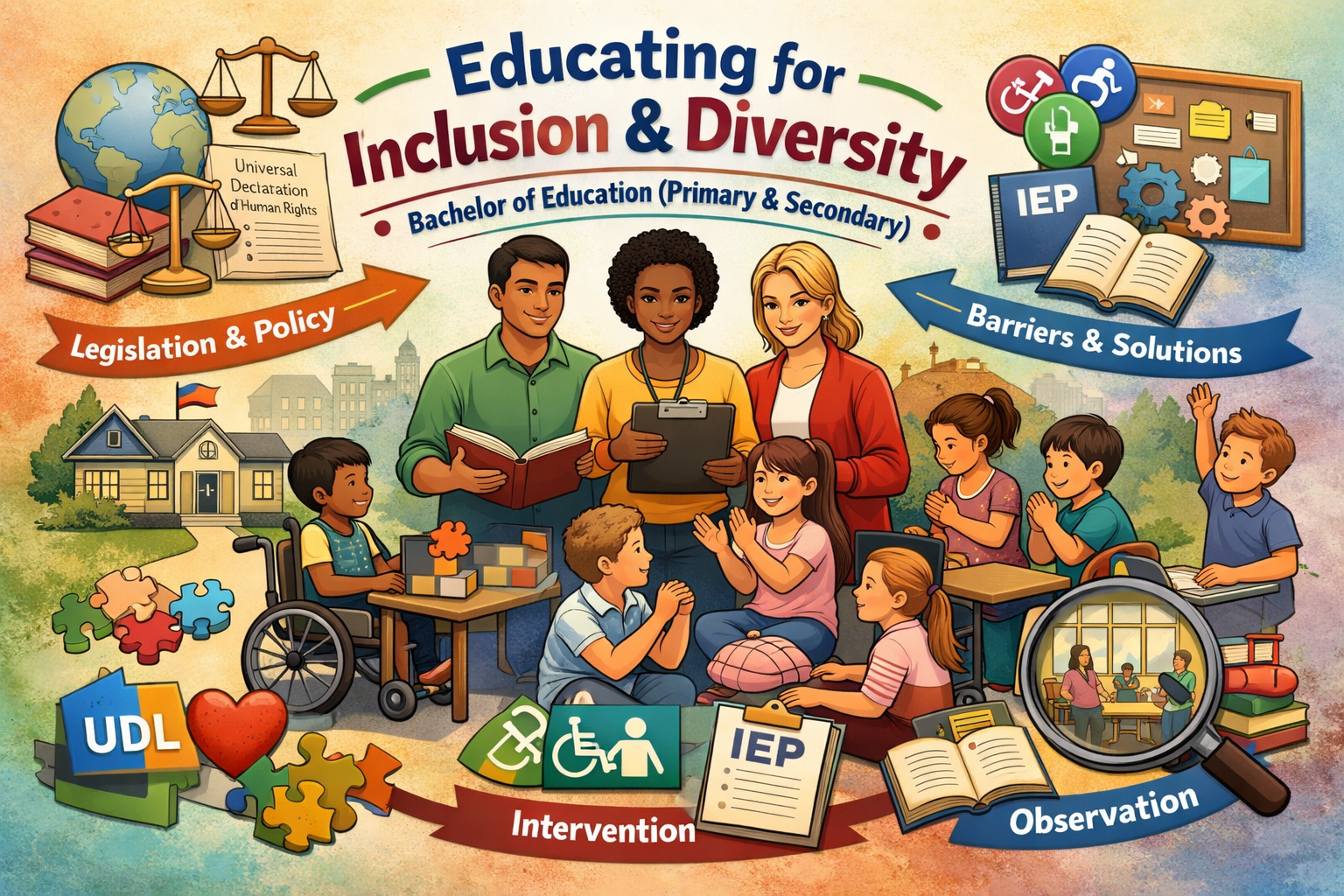
This course provides a comprehensive foundation in inclusive education and diversity within primary and secondary school contexts. It equips pre-service teachers with the theoretical knowledge, legal understanding, and practical skills necessary to create equitable, inclusive, and learner-centered classrooms.
The course begins by exploring the theoretical foundations of inclusive education, including key concepts of inclusion and diversity, core principles and values, and the historical evolution of inclusive practices. Students examine major models of inclusion—particularly the social and medical models—and reflect on real-life experiences to deepen their understanding of inclusive education.
Building on this foundation, the course examines international conventions, regional frameworks, and national legislation that support inclusive education. Students analyze current inclusion policies and objectives, including the principles of the Universal Declaration of Human Rights, and explore the concept and standards of Universal Design for Learning (UDL). Emphasis is placed on understanding the importance of legal frameworks in shaping inclusive school policies and classroom practices.
The course then addresses the complexities of inclusion, including barriers to participation in education and society. Topics include gender equity and diversity, sex and sexuality, types of disabilities, causes and prevention strategies, and support for learners with learning disabilities. Students develop strategies to create inclusive, friendly classroom environments while demonstrating confidence in organizing teaching and learning that acknowledges diverse learner needs.
A strong practical component focuses on planning and teaching for all learning abilities. Students examine differentiated instruction, assessment opportunities for different disabilities, and pedagogies of intervention. They learn to design appropriate interventions, analyze Ministry-approved identification and guidance procedures, and implement strategies to support literacy and numeracy challenges. The course also introduces the development and application of Individual Education Plans (IEPs) and promotes the creation of barrier-free, student-friendly learning environments.
The final component emphasizes observation and reflective practice. Students observe inclusive practices in local classrooms and schools, apply effective observational tools, critically analyze collected data, and reflect on current inclusive practices. This experience strengthens their ability to translate theory into practice.
Assessment includes individual evaluation tasks and a group presentation, culminating in a final examination.
Overall, this course prepares future educators to foster inclusive, equitable, and supportive learning environments that respect diversity and promote positive learning outcomes for all students.
- Teacher: Deewakarsingh AUTHELSINGH
- Teacher: Augustin NASSE

- Teacher: Achille Tallet
- Teacher: Flexon Tanga

- Teacher: Achille Tallet
- Teacher: Flexon Tanga